Key Questions to Ask Your LED Display Supplier
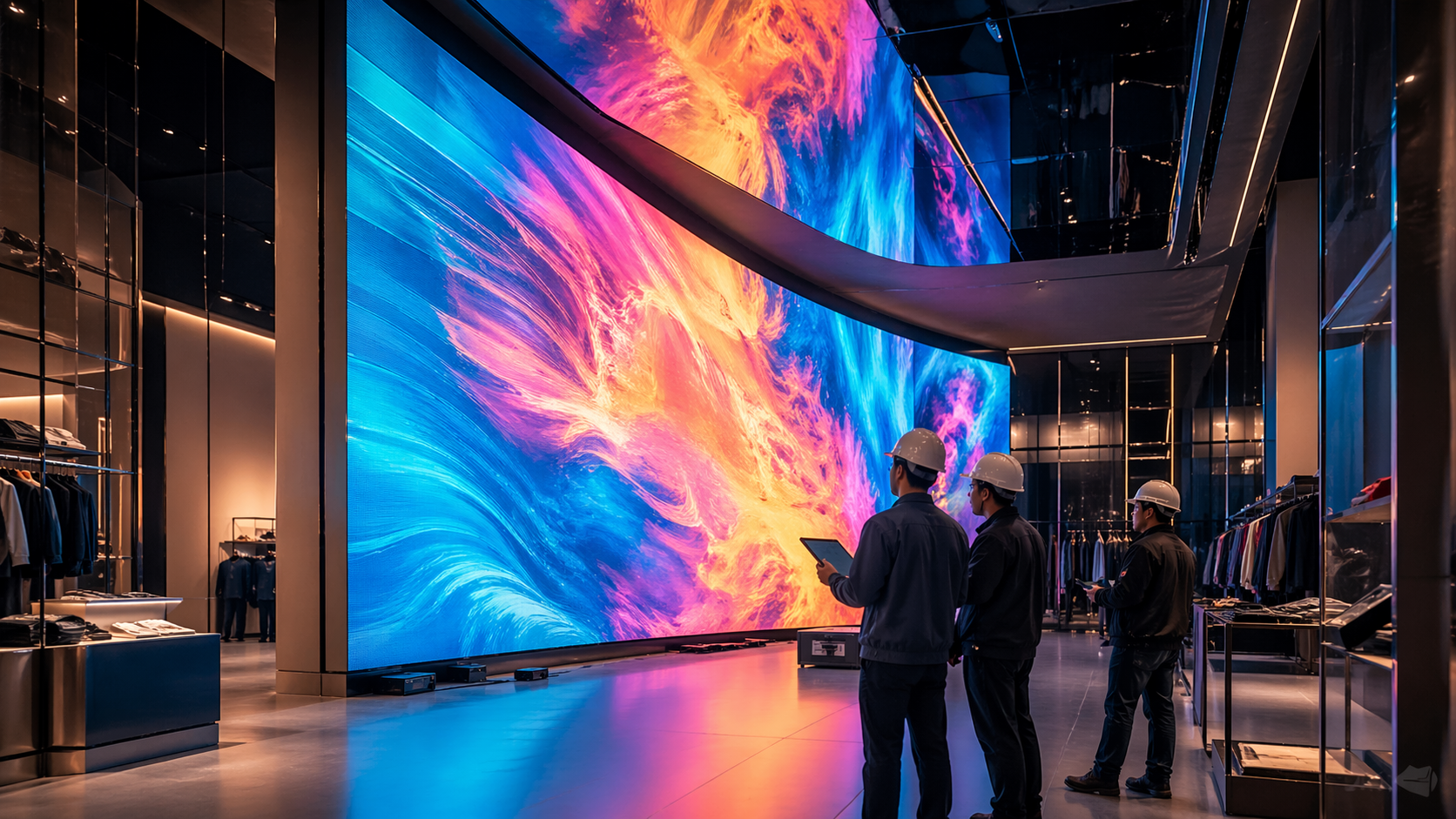
You’re sourcing a large-format LED display for a retail flagship, a stadium, or a corporate lobby. You’ve found three or four suppliers online, all with similar-looking spec sheets, similar pricing, and suspiciously identical claims. Where do you go from here?The wrong call isn’t just expensive. It’s a project delay, a failed installation, and a support nightmare stretched across time zones. The right questions — asked early — separate a serious LED display manufacturer from a box-pusher. Here’s what to ask.
1. What’s Your Actual Manufacturing Process — and Can I See It?
Don’t assume every supplier is a manufacturer. Many are traders. They buy finished panels from third-party factories, rebrand them, and ship them out. That’s not inherently wrong — but you need to know.A genuine active LED screen manufacturer owns their production line. They control component sourcing, assembly, quality testing, and output standards. Ask directly: “Do you manufacture in-house or source from OEM partners?” Ask to see their factory — photos, a virtual walkthrough, or even a video call from the floor. Real manufacturers welcome this. Middlemen deflect.Why does it matter? Because when something goes wrong — a batch of panels with colour inconsistency, a cabinet with structural flex — the manufacturer can trace it. The trader often cannot.
2. Which LED Chips Do You Use, and Why?
The LED chip is the heart of the display. It determines brightness, colour accuracy, lifespan, and long-term uniformity. Most suppliers won’t volunteer this information unless you ask.Common chip brands used across the industry include Nationstar, Kinglight, and Cree — each with different performance tiers and price points. Ask your supplier which specific chip they spec and why that brand suits your application.Also ask about pixel pitch. A P4 outdoor panel and a P2.5 indoor panel serve entirely different purposes. If a supplier is recommending a pitch without asking about your viewing distance, installation environment, and ambient light conditions... that’s a red flag.
3. What Certifications Does Your Product Carry?
For the US market, this isn’t optional. Your display will need to meet baseline electrical and safety standards. Ask for:
- UL certification (electrical safety)
- FCC compliance (electromagnetic emissions)
- CE marking if any components are EU-sourced or if there’s cross-border supply chain exposure
- IP rating for outdoor displays (IP65 or higher is generally expected)
- RoHS compliance (hazardous substance restrictions)
Any credible LED display manufacturer will have these on file and share them without hesitation. If they’re hard to produce, or if you get a vague “we meet all international standards” — push harder.
4. What Does Your Warranty Actually Cover?
Most suppliers quote a “2-year warranty” or “3-year warranty” up front. Dig into the details.Warranties in the LED industry typically cover the LED modules but may exclude the power supplies, receiving cards, or cabinets. Some cover parts only — not labour or shipping. If the display is deployed in Phoenix or Miami where heat and humidity put real stress on electronics, a warranty that excludes environmental damage is essentially useless.Ask specifically: What’s included and excluded? Who bears the cost of parts shipping? Is on-site support available in the US, or is all troubleshooting done remotely? What’s the average response time for a warranty claim?A supplier who has walked dozens of US clients through post-installation support will answer these confidently. One who hasn’t will stumble.
5. Do You Have Reference Projects in the US — and Can I Contact Them?
Case studies on a website prove nothing by themselves. What you want is a name and a contact.Ask for two or three completed installations in the US that match your project type — outdoor advertising, indoor retail, stadium perimeter, corporate AV. Then actually reach out. Ask those clients: Did the display perform to spec? Was installation straightforward? How responsive was the supplier when issues came up?This step gets skipped more often than it should. Don’t skip it. A quality active LED screen manufacturer with real US project history will have references ready. Suppliers without them will offer “confidentiality” as an excuse.
6. What’s Your After-Sales Support Infrastructure?
The sale is the easy part. What happens after?LED displays are complex systems — control processors, power supplies, data cabling, software interfaces. Even well-built units require occasional calibration, firmware updates, and module replacements over a typical lifespan of 50,000 to 100,000 hours. If your supplier’s support team is 12 time zones away and only reachable by email... plan accordingly.Ask: Is there a US-based technical support contact? Do you supply spare modules for field replacement? How are replacement parts shipped and how quickly? What training or documentation comes with the installation?Support infrastructure is where the difference between a budget supplier and a long-term partner becomes viscerally clear.
The Bottom Line
Choosing a LED display manufacturer isn’t just a procurement decision. It’s a technical partnership — one that will determine whether your installation performs reliably for years or turns into a recurring problem. The questions above aren’t adversarial. They’re the baseline for any serious supplier conversation.Ask them early. Ask them directly. The answers will tell you everything.Ready to talk specs, certifications, and real project references? LEDX Technology brings active LED screen manufacturing expertise and a track record of US deployments — connect with our team to get started.
